Vegetables and greens
Aim for roughly half the plate with colourful produce. Rotate between raw, roasted, and steamed preparations to maintain texture variety throughout the week.
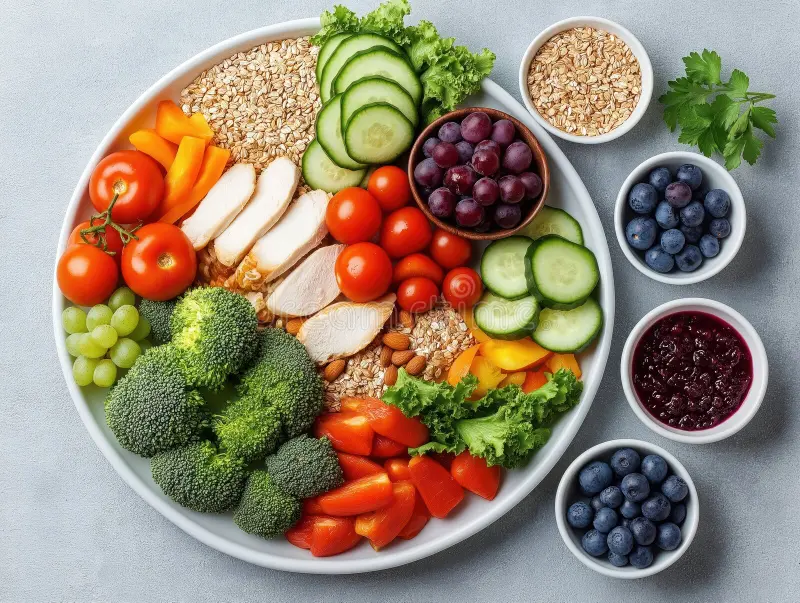
This page outlines visual frameworks for assembling meals, navigating grocery aisles with purpose, and maintaining variety without complexity. General food education only — not a diet prescription, weight-loss plan, or substitute for professional dietary advice.
Aim for roughly half the plate with colourful produce. Rotate between raw, roasted, and steamed preparations to maintain texture variety throughout the week.
Reserve a quarter of the plate for whole grains, starchy vegetables, or legumes. We emphasise minimally processed sources and portion awareness rather than elimination.
The remaining quarter accommodates lean animal proteins, tofu, tempeh, eggs, or combined legume-grain pairings. Rotating sources adds variety to your weekly shop.
Rather than enforcing rigid intervals, we suggest observing hunger cues and energy patterns over a two-week period. Document findings in our reflection journal template.
Option A
Suitable for structured office days with defined lunch breaks and evening dining windows.
Option B
Helpful during higher-activity periods or when lunch occurs early in the day.
Option C
A composed snack board consumed across a longer window for shift workers or irregular schedules.
Begin each trip in the fresh section. Select seasonal items highlighted in our quarterly produce chart, then build meals backward from what is available and fresh.
Maintain a core list of oils, vinegars, whole grains, canned legumes, and spices. Restock only when quantities fall below a two-week threshold to reduce impulse purchases.
Review ingredient lists for added sugars and sodium content. Our educational sheets explain common terms without promoting fear-based messaging.
Frozen vegetables, tinned fish, and bulk legumes serve as cost-stable protein and fibre sources across seasons.
Base grain, roasted vegetable, protein element, dressing, and crunch topping. Swap any layer independently while maintaining structural balance.
Combine chopped vegetables and protein on a single tray with unified seasoning. Ideal for Sunday preparation that feeds Monday and Tuesday lunches.
Aromatics first, firm vegetables second, leafy greens last, protein added at the appropriate stage. A fifteen-minute framework for weeknight cooking.
Restaurant and café meals are part of social life. Our dining guide suggests reviewing menus beforehand, selecting vegetable-forward dishes, requesting dressings on the side, and balancing richer meals with lighter options at adjacent sittings. No food is labelled as forbidden.
Review the week ahead, confirm ingredient availability, and assign two batch-cook items to prepare that evening.
Replenish chopped vegetables and cooked grains. A short midweek session can reduce reliance on takeaway when time is limited mid-week.
Note which meals felt satisfying, which felt rushed, and one adjustment for the coming week. Reflection drives sustainable improvement.
Water remains the primary hydration source. Herbal infusions, sparkling water with citrus, and broth-based soups complement meals without replacing whole-food fibre intake.
We discourage using beverages as meal substitutes except where time constraints make a blended whole-food smoothie a practical interim option. Our guides include composition notes for balanced smoothie assembly.
A fourteen-day observation template to track meal satisfaction, preparation time, and ingredient variety. Available through our educational products catalogue.